Dev Diary: Making an RTS in the Spirit of C&C Generals with an AI Companion
Why Previous Attempts Died
Hi. I'm an environment artist, not a programmer. But this isn't my first time sitting down to make my own game — this time it's a multiplayer RTS built for online play, with C&C Generals as a reference. And for the first time in a long while, the project isn't falling apart after two weeks. I've tried making games with neural networks before. And every time I hit the same wall: the neural network quickly started hallucinating in the code. The more complex the architecture became, the less the model understood the context. Without constant oversight, it would "improve" working pieces and break what was already functioning. At some point, it was easier to rewrite everything from scratch than to fix the generated chaos. Back then, it seemed like the problem was the idea itself. Now I understand: the problem was the lack of a foundation and automated verification.
What Changed This Time
1. Reference as an Anchor Before, I'd write something like "make an RTS" into the chat. Now, Claude and I have broken down C&C Generals in detail: resources, construction, group control, attack ranges, unit behavior, match pacing. Not just "similar to Generals," but specific mechanics. This had an unexpected effect: an architecture emerged from scratch. Each iteration takes us further away from the reference, but the reference itself keeps the project within bounds. The first version slid into chaos not because the AI was bad, but because it had no foundation. 2. MCP in Unity Instead of Plain Chat Before, I'd copy code from the chat into Unity and pray. Now Claude Opus 5 is connected via MCP: it compiles and tests the code itself. This fundamentally changes the process — the model sees the result, reads errors, and fixes them, rather than just responding with text. For me, as an artist, this matters: I don't want to sit in code for hours, I want to see the skeleton of the game start working. 3. Role Separation Between Neural Networks Claude Opus 5 — code, architecture, compilation, tests. ChatGPT — reference generation and design development. A model for unit generation — haven't chosen one yet, but base unit models and their HP will be generated at the concept stage. The final in-game models I'll still recreate by hand based on the reference. Generation isn't for production — it's so that I, as an artist, can better visualize the unit's image and its role in the game.
Why Multiplayer Right Away
Many people advise making a single-player version first, then adding networking. But our strategy is built for online from the start. It's harder at the beginning, but it eliminates the main problem: you don't have to rewrite the logic for network code later, when single-player already works. Yes, it's painful. But with MCP and constant testing, the pain is at least visible and controllable.
What's Next
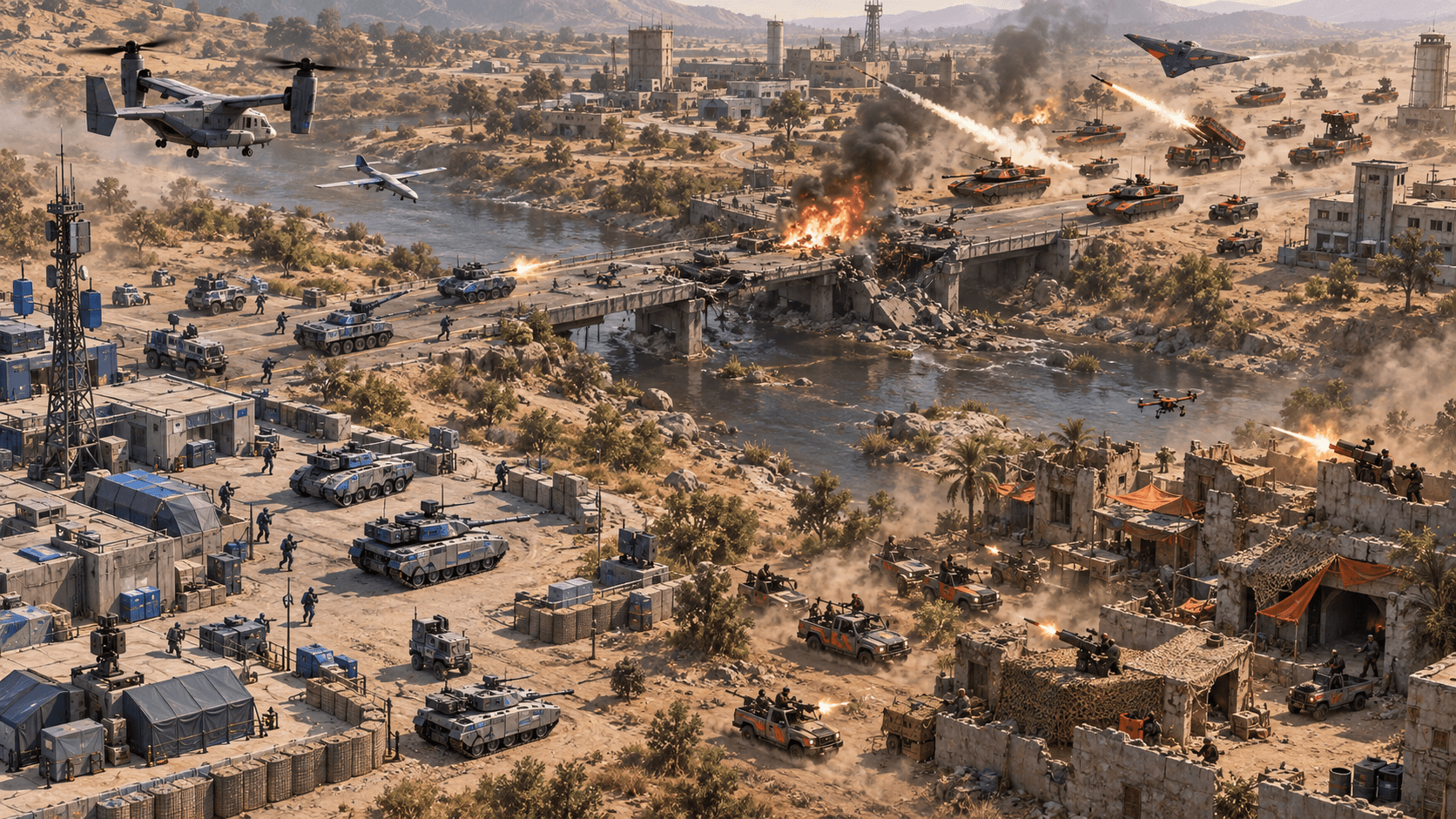
It's too early to show gameplay, but the skeleton no longer crumbles. Structure has emerged, a process has emerged, and most importantly — there's a feeling that the project can be led as a solo artist with a strong technical partner. I'll keep this devlog going throughout development. If you, as an artist or just a solo developer, are interested in how to use AI not for "make me a game," but for filling specific gaps — there will be more specifics ahead. Here are a few images of what's currently in progress: 
 these are early concepts for now. Everything is actively being worked on.